Exploring the Final Frontier: A Journey Through Space
Published over 1 year ago

Space: infinite, mysterious, and full of wonders like nebulas and black holes. Humanity’s cosmic journey continues, seeking answers and adventure.
Space. The word alone conjures images of infinite blackness speckled with twinkling stars, swirling galaxies, and the promise of the unknown. It’s the ultimate frontier, a vast expanse that has captivated human imagination for millennia. From ancient stargazers charting constellations to modern astronauts stepping onto the lunar surface, our fascination with space continues to grow. But what is it about this cosmic void that keeps us looking up, dreaming of what lies beyond?
The Scale of the Universe
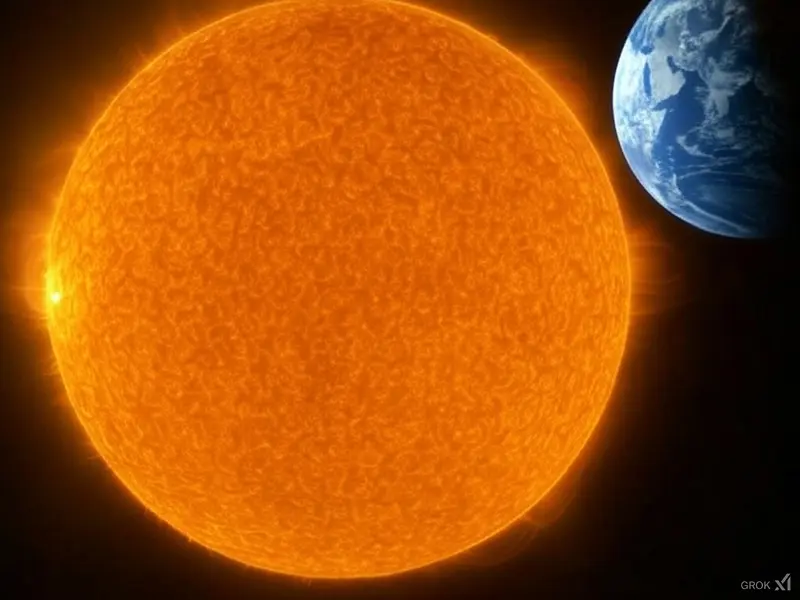
The universe is mind-bogglingly huge. To put it in perspective, our own galaxy, the Milky Way, contains an estimated 100 billion stars—and it’s just one of countless galaxies out there. Light from the farthest reaches of the observable universe takes over 13 billion years to reach us, meaning we’re peering into the past every time we gaze at the night sky. Space isn’t just big; it’s a tapestry of time, energy, and matter woven together in ways we’re only beginning to understand.
At the heart of this cosmic drama are phenomena like nebulas—massive clouds of gas and dust where stars are born—and black holes, mysterious regions where gravity is so intense that not even light can escape. Then there’s dark matter and dark energy, invisible forces that make up most of the universe yet defy our attempts to fully grasp them. Space isn’t just a place; it’s a puzzle waiting to be solved.
Humanity’s Cosmic Ambitions
Our journey into space began in earnest with the Space Race of the 20th century. In 1969, humanity took its first steps on the Moon, a moment immortalized by Neil Armstrong’s words: “One small step for man, one giant leap for mankind.” Since then, we’ve sent rovers to Mars, probes to the outer planets, and telescopes like Hubble and James Webb to peer deeper into the cosmos than ever before.
Today, space exploration is entering a new era. Private companies like SpaceX and Blue Origin are pushing the boundaries of what’s possible, from reusable rockets to plans for Martian colonies. Meanwhile, NASA’s Artemis program aims to return humans to the Moon, paving the way for sustainable exploration. The dream of space isn’t just about science—it’s about expanding the human story into the stars.
The Wonders of Space
Space is full of wonders that spark both awe and curiosity. Take the Orion Nebula, a stellar nursery 1,344 light-years away, where new stars ignite in a dazzling display of light. Or consider Saturn’s rings, made of ice and rock, stretching across hundreds of thousands of kilometers yet as thin as a whisper. Then there’s the eerie beauty of a supernova, the explosive death of a star that can outshine an entire galaxy for a fleeting moment.
Even closer to home, our own solar system is a gallery of oddities. Jupiter’s Great Red Spot, a storm twice the size of Earth, has raged for centuries. Titan, Saturn’s moon, boasts lakes of methane under a thick, hazy atmosphere. And beyond Neptune, the Kuiper Belt holds icy remnants of the solar system’s birth, hinting at the chaos that shaped our world.
Why Space Matters
Beyond its beauty, space holds answers to some of humanity’s biggest questions. How did the universe begin? Are we alone? The search for extraterrestrial life drives missions to Mars, Europa, and beyond, where subsurface oceans or ancient riverbeds might harbor clues. Space also challenges us to innovate—technologies like GPS, solar panels, and even memory foam trace their roots to space programs.
But perhaps the greatest gift of space is perspective. The famous “Pale Blue Dot” photograph, taken by Voyager 1 in 1990, shows Earth as a tiny speck in the vastness of the cosmos. Carl Sagan reflected on it, saying, “That’s home. That’s us… every saint and sinner in the history of our species lived there—on a mote of dust suspended in a sunbeam.” Space reminds us of our smallness, yet also our potential.
The Future Awaits
As we stand on the cusp of a new age of exploration, space beckons like never before. Will we build cities on Mars? Discover life in distant oceans? Unlock the secrets of black holes? The possibilities are as endless as the universe itself. For now, we keep exploring, driven by the same curiosity that once turned our eyes to the stars.
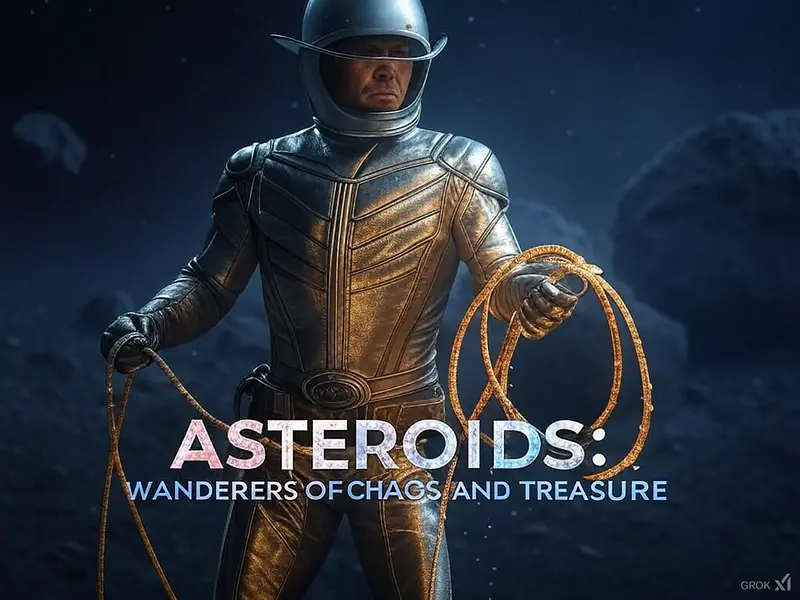
So, the next time you look up at the night sky, imagine yourself as a Space Cowboy—hat tipped, laser gun in hand, riding through the galaxy. Because in the grand adventure of space, we’re all travelers, chasing the unknown with wonder in our hearts.

1 comment
Become a member to join the conversation
Rich Chetwynd over 1 year ago
Wow space certainly is big! 🤯